
Crop 01 · Vigna subterranea
A groundnut that
ripens underground
Bambara carries up to 26% protein in the dry seed, plus fibre, slow carbohydrate and the lysine cereals lack. It grows in heat and poor soil, and fixes nitrogen for the next crop.
Source: published composition range for Bambara dry seed, 19 to 26% protein. Our own batch figures are published in each Crop Passport.
What makes Bambara different
Eight reasons to put it on the shelf.
Protein
Up to 26% protein in the dry seed, published range 19 to 26%, suited to bread, bars and drinks without added isolates.
Fibre
Whole seed fibre stays in the flour, so the fibre in a ChiNdü bread comes from the crop rather than an additive.
Lysine
The amino acid cereals are short of. Pairing Bambara with wheat or oats closes a gap British diets rarely notice.
Mineral richness
Per 100 g of dry seed: iron around 4 to 9 mg, magnesium around 160 to 200 mg, potassium around 1,100 to 1,500 mg. Published composition data.
Crop resilience
Grows in poor soil with low rainfall, and ripens its pods underground where heat does less damage.
Nitrogen fixing
Root bacteria help Bambara turn nitrogen from the air into a form it can use. Crop residues can also contribute nitrogen to the soil.
Whole crop potential
Seed, husk and haulm all have a route: food, ingredient streams and animal feed.
Built for modern food
Protein and starch fractions behave well in bakery, snack and beverage applications.
Comparison
Where Bambara brings something the others do not.
Soy and pea are good proteins. The case for Bambara is not that it beats them on every line, it is that it grows where they struggle and widens a food system currently leaning on very few plants.
Soy and pea fix nitrogen too. All three are legumes: bacteria in their root nodules convert nitrogen from the air into a form the plant can use. Bambara stands out because it can do this in hotter, drier and lower-input conditions.
Bambara is often called a complete food because one seed provides protein, carbohydrate, fibre, fat and minerals. Complete food does not mean complete protein: like most legumes, Bambara is lower in sulphur-containing amino acids and works well alongside cereals.
Nitrogen fixing
BambaraYes
SoyYes
PeaYes
Grows on poor, dry soil
BambaraYes, tolerates heat and low rainfall
SoyPrefers good soil and steady water
PeaPrefers cooler, wetter ground
Pod ripening
BambaraUnderground, sheltered from heat
SoyAbove ground
PeaAbove ground
Lysine story
BambaraStrong, complements cereals
SoyStrong
PeaStrong, lower methionine
Whole crop use
BambaraSeed, husk and haulm
SoySeed and meal
PeaSeed and hull
Supply concentration
BambaraNew route, grower networks being built
SoyHighly concentrated global supply
PeaConcentrated in a few regions
Food system diversity
BambaraAdds a crop the market does not yet use
SoyAlready deeply embedded
PeaAlready widely used
Our 13th Reason
A wider crop base makes food stronger.
Britain, shoppers, manufacturers and farmers each need more useful crops in the food system. See the pressures we are answering and the work already under way.
Read Our 13th Reason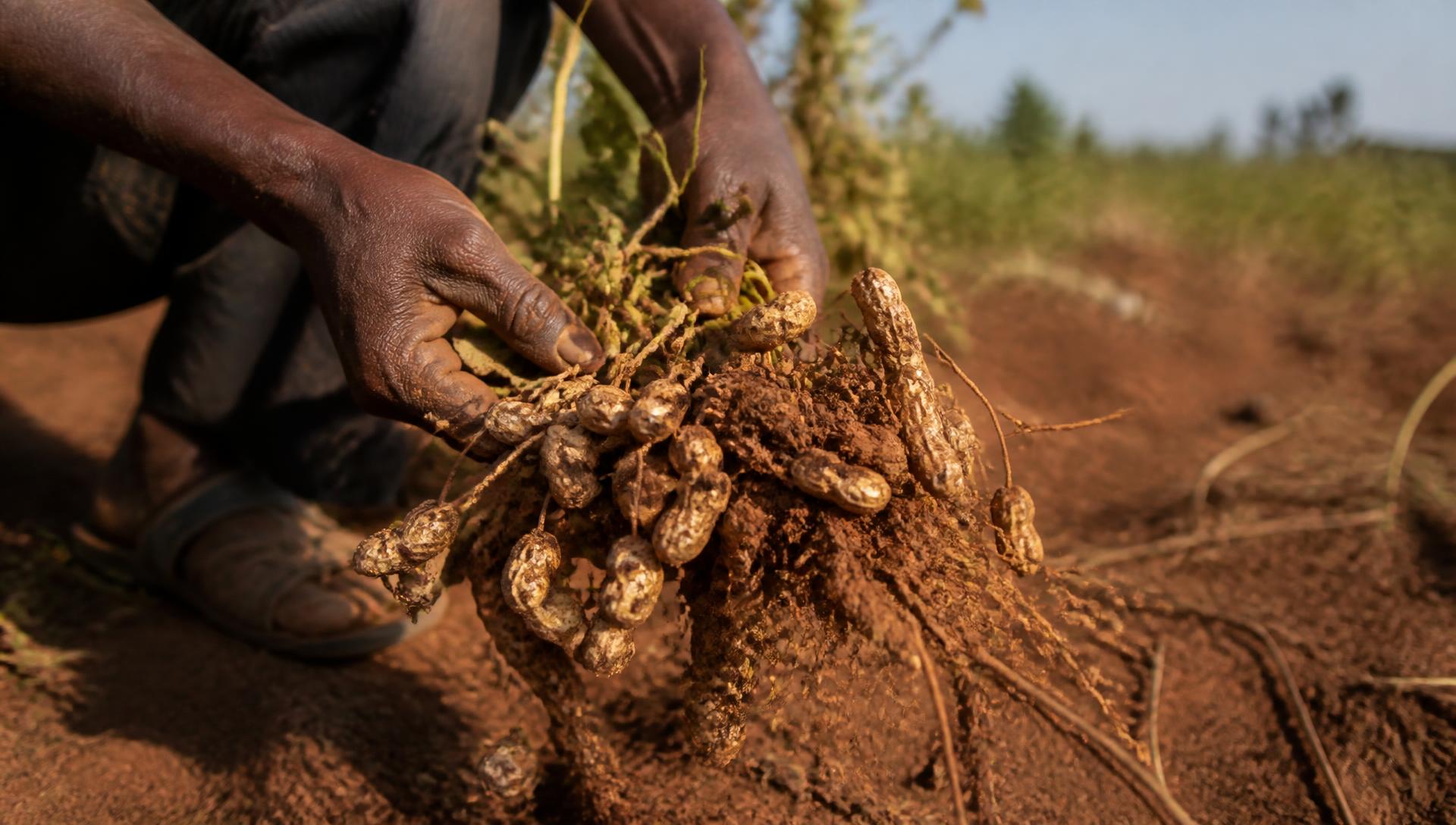
Climate and farming value
A crop for the weather we are getting.
Yields under conditions that reduce cereal harvests.
Fixes nitrogen through root bacteria; crop residues can contribute nitrogen to the soil.
Productive on marginal arable land that other crops write off.
Fits intercropping systems already used across West Africa.
History and people
Grown for centuries, mostly by women.
Bambara has been cultivated across West and Central Africa for centuries, kept in the ground by farmers who understood what it does for soil and for a household. It is largely a women's crop. Women select the seed, plant it, weed it, harvest it and decide what is sold and what is kept for the family.
It never entered global commodity trade, so it was never bred for uniformity or distance. That is why it survived in local hands and why it is still adapted to difficult ground. Our work starts by buying it properly, at planned volumes, from the people who already know how to grow it.
Our farms and partnersApplications
What Bambara becomes.
Plant drinks
High protein bread
Granola snack bars
Chips
Protein and starch ingredient streams
Breakfast and porridge
Learn it in three questions